
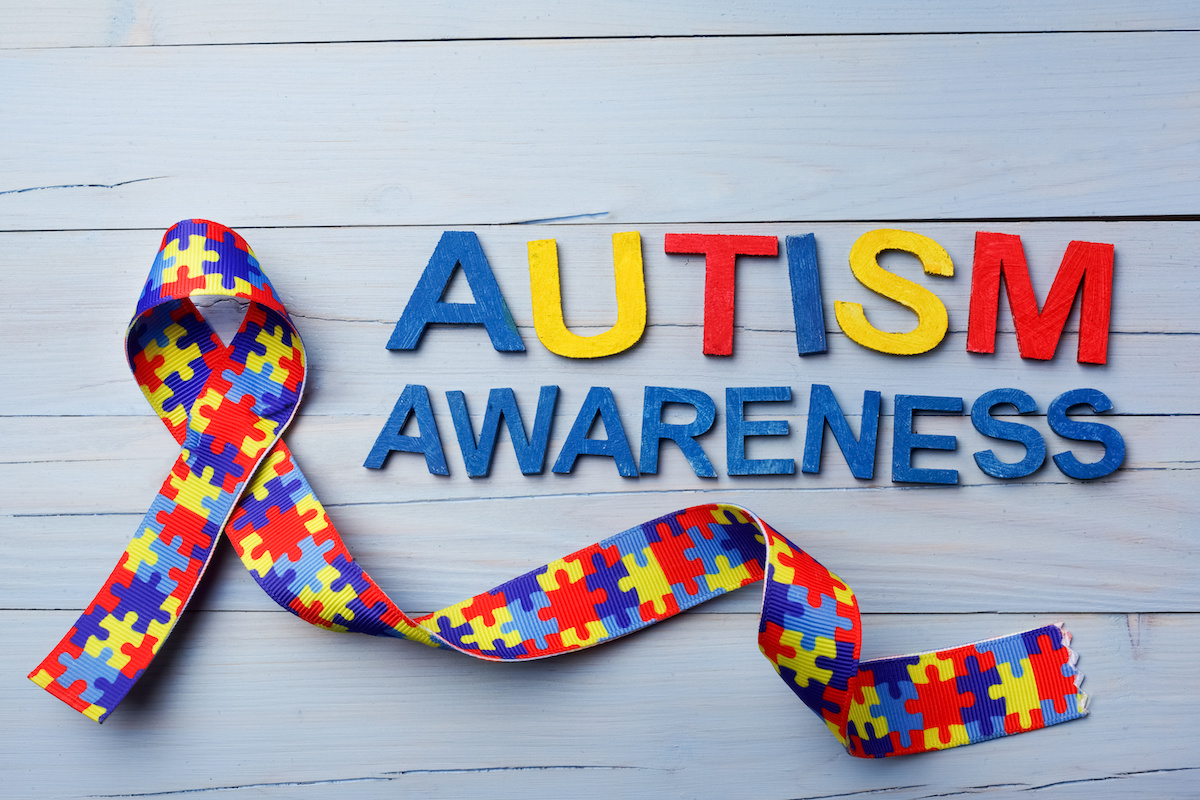
Autism is a complicated topic to discuss with others even though it is so common. Autism spectrum disorder (ASD) is a condition that can affects how people communicate or behave in the everyday world. People with autism can struggle to express themselves, and they may struggle with social interactions.
There are limited attempts to respond to conversations that make them unique. Being nonverbal is a whole different field of finding ways to express yourself. Due to this, autistic people often have a hard time maintaining relationships, though some might not understand why.
To diagnose autism, doctors search for certain patterns or behaviors. These behaviors are usually restrictive and repetitive.
Repetitive behavior is how autistic people need a routine: everything needs to be the same or well organized to their liking. This can create a difficulty moving around to different places and stressing over small changes.
Restrictive behavior is an “abnormal” focus or interest in a certain object. Signs of restrictive behavior is strong attachment towards an object. They could also feel indifferent towards pain and cold/hot temperatures.
Many people would assume that it is a bad thing to be autistic. Many would become mad over being called autistic or even having symptoms. Many kids today who are not autistic insult each other, calling them autistic, which is normalized in this time period. This creates a stigma towards autism.
But we all have behaviors that make us unique, and the “symptoms” of autism are just a larger set of those behaviors.
Doctors use a unique way when they diagnose autism compared to other mental disorders. Autism is explained in three levels, and each level is more severe compared to the other.
When my younger sister was born, she was born with a lot of complications because she was an early birth. She was officially diagnosed when she was 12, and she is 15 years old now. She has had a lot of behavior problems with many things that are not up to the neurotypical standards. She is nonverbal and cannot express herself except through her AAC device. AAC stands for augmentative and alternative communication, which is a completely different way to communicate. This could be sign language, picture communication boards, and speech generated tablets. My sister uses a speech tablet. If you press a button on the table like the button hello, it says hello back. My sister is no different than a neurotypical person otherwise, but this communication device makes her unique.
Many people describe an autistic person as a non controllable aggressive person. Believe it or not, most autistic people are not aggressive, they are usually friendly. Most neurotypical people cannot spot any autistic people because they act to societal standards. It truly depends on how many other disorders they have.
These three levels of autism, according to the DSM-5, or theDiagnostic and Statistical Manual for Mental Health Disorders, 5th edition. This manual is what medical professionals use for detailed definitions for mental health. This edition was created in 2013 and updated in 2022.
There are three levels of autism and the symptoms are differ compared to each other. Some autism children can have worse symptoms than others.
Level 1
People who have level one autism have milder symptoms than those of other levels. Most people may not even know this person has autism in the first place.
They may avoid socializing with people if there is no help. They may have visible impairments, sensory problems, behavioral problems, which are the difficulty following directions or a loss of train of thought.
The lack of change in behaviors, no matter the situation, can be very difficult for the autistic person to understand. The effect of this persistent behavior can change the outcome in daily activities. Difficulty switching to a different activity will also show.
Level 2
This level is more acknowledgeable, unlike level one autism. Level two autism behaviors will be visible toward other people.
Verbal and nonverbal social communication cues, social impairments are more visible, like needing assistive devices (wheelchairs and cans). Limited start of social interactions, restricted or “abnormal” responses to social conversations. For example, the autistic person’s vocabulary is very limited to simple sentences. An “abnormal” behavior is a nonverbal response in a conversation.
They may have difficulty with dealing with change, and show repetitive behavior (stimming like hand flipping, fidgeting, repeating words and sounds) and restrictive behavior (have a persistent routine). This behavior happens more obviously and it interferes with functioning, it could cause distress.).
Level 3
Level three autism is a daily problem to autistic people who is this far into the spectrum
They may have a terrible difficulty with verbal/non verbal communication, which causes more impairments in living life as a whole. (Basically you cannot have a proper conversation at all.) They may have a very limited start of a social interaction and a limited response to social interactions. The person will only interact if they need something only and only respond to direct social interactions.
They struggle more with changes to their daily lives. They will have a large struggle if anything has changed, which causes distress and difficulty.
These three levels are what the doctors look for whenever they test their patients. It has to be a handful of symptoms because everyone has at least one symptom of autism.
Autism spectrum disorder explains how people are different from everyone else. A spectrum is a measurement, and everything gets measured, including the neurotypical people.
Imagine a world where everyone and everything is the same. Things will be bland like an empty painting cavus but if each person adds into each color in canvas, which makes the world more colorful.
This is how I see the word “spectrum.” We all make a beautiful, colorful canvas with each other. People with autism are not as different as neurotypical people are; they just view the whole world differently. The stigmas around them are nothing compared to how autism actually is. The world will live much better without stigma echoing around within the social structure.











Nathaniel Dent • Jun 5, 2026 at 6:49 pm
Amazing article, keep up the good work!