
Humanity is something we look for in all aspects of life, whether we mean to or not. The feeling that you’re experiencing something not contrived, whether it be good or bad, is what draws us to people, movies, music, even clothes. This feeling of humanity is comforting. It speaks to a deeper part of us and our ideology. Superheroes, for example, have always tried to evoke this realness.
Their flashy costumes, charming one-liners and dramatic action scenes are what pull us in at first but their depressing origin stories, serving as the motive behind the selfless acts they do, and the trust that’s instilled in them for these acts are what speak to our humanity, making superheroes easy to idolize.
This formula has been recycled over and over again, most notably through recent Marvel movies, making this superhero persona feel contrived and thus unable to represent humanity fully.
You have Captain America, Captain Marvel, Iron Man, and other movies featuring these flashy heroes that try to speak to our humanity but end up missing the mark because their stories can only serve as entertainment.
Or can they?
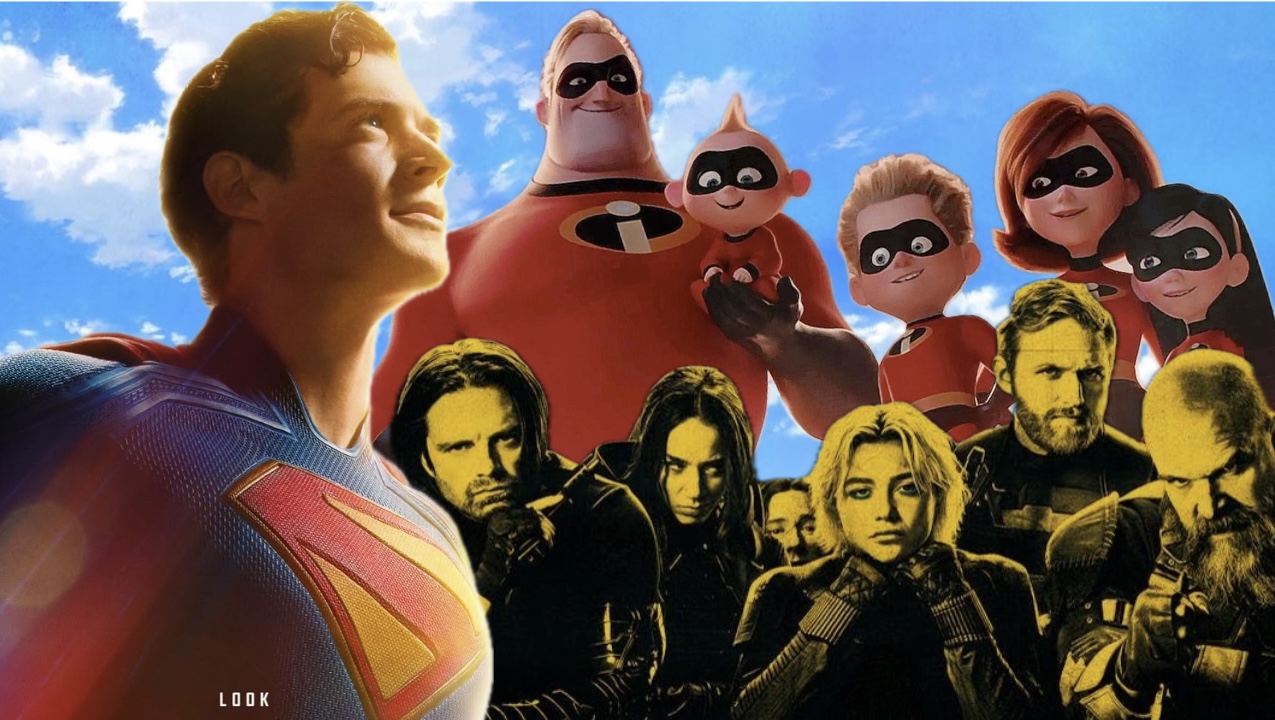
Last summer, I was rewatching a bunch of superhero movies and realized that “Incredibles” 1-2, “Thunderbolts*”, and “Superman” (2025) felt different compared to your average Marvel movie. They did more than use the recycled superhero persona to entertain me; in fact, they got rid of the recycled superhero-persona entirely, allowing me to look at the real world through a new lens.
“Superman” treats the character of Superman in a way I’ve never seen before. The movie picks up on the more tender aspects of his life, like his childhood growing up on his parents’ farm and his love for rock music. His romance with Lois Lane, most notably, is so realistic and passionate. Lois is essentially his safe place, much like our safe places are with the people we love, but their relationship has tension that perfectly encapsulates the classic human x superhero trope without reducing either of their characters.
The movie also serves as a political commentary, as Lex Luther and the government treat Superman in a way similar to how our own government treats immigrants, labelling him as an illegal alien, stripping him of his rights, and using intentionally misrepresentative propaganda to pit him against mankind. For the first time ever, we see Superman in a weakened and vulnerable state because he is more than just the Man-Of-Steel: he loves, he cries, he loses, he feels, he’s just as human as anyone.
Superman’s honest disdain for the evil within his society reflects the attitude more and more people are starting to have towards our own society. We, like Superman, are seeing our society for what it truly is: corrupt. And this makes us feel helpless and unsafe at times because we are unable to see the humanity in our society. So Superman’s ability to rise above the system while doing everything in his power to fight for mankind gives us the figure that actually represents humanity while still keeping the charming aspects we enjoy in superheroes.
Similarly, “Incredibles” 1-2 show us what finding identity in a society that encourages you not to is like, using the titular family to create a realistic narrative that immerses us into their superhero world where, like ours, unique people are treated unequally.
After many instances where heroes save people who claim they didn’t need saving, resulting in many multi-million-dollar lawsuits, humans decide they’ve had enough of supers, banning them entirely and forcing them into completely concealing their identities.
The dinner scene from the first movie encapsulates the effect this ban has on the super family. Elastigirl (Hellen Par) and Mr. Incredible (Robert Par) get into an argument about the constant trouble their son Dash has been getting into with using his super speed powers to pull pranks at school. Mr. Incredible, who is still obsessed with superheroes well after the ban ended his superhero career, encourages both Dash and his older sister Violet to embrace their super identities, arguing Dash needs an outlet for his energy and even Violet as shy and quiet as she is agrees with this sentiment but Elastigirl, fearing for her children’s safety, just wants her family to live a “normal life” and discourages them from doing activities that might expose their superpowers.
The voice acting during this scene is extremely realistic. The passive aggressive tone Mr. Incredible and Elastigirl take when making their comments towards each other, the intensity in Elastigirl’s voice when she yells at everyone after the argument spirals out of control and how the family immediately stops arguing makes it feel so real.
This scene also establishes that the family is unable to be their true selves in their society, something a lot of people can relate to in our society.
Issues like abortion laws, anti-transgender laws, the intentional destruction of DEI, and the overall hate for unique people in our society have hindered people’s ability to be themselves. This connection, paired with the realistic portrayal of the Incredibles family as a normal family, is why the “Incredibles” movies speak to our humanity while keeping the charming aspect of superheroes.
The “normal lives” society forces the Incredibles family and people in real life to live just simply doesn’t exist because society’s perception of their “unusualness” is their normal.
“Thunderbolts*” is also a movie that speaks to people who are treated as less than by the system, using the darkest aspects of society to show why we need humanity.
The film immediately takes a dark tone within the first few scenes. We are introduced to Yelena, a former enslaved child assassin in Russia who’s searching for a meaningful life in her unfulfilling job as a mercenary for the corrupt CIA director, Valentina Allegra de Fontaine.
We see how Alexi, Yelena’s father, influences her understanding of having a fulfilling life as he also works as a chauffeur for Valentina and claims to love it but it’s very obvious that he was much happier when he was a superhero in Russia saving lives and serving his country.
In a set up created by Valentina where she plans to kill Yelena and her two other mercenaries, all of them also leading very depressing lives, we are introduced to Robert who vulnerability Valentina prays to execute her evil plan to create a superhero that will completely replace the Avengers and implants him with extremely powerful superpowers that literally trap him and others within the confines of their minds, forcing them to experience the darkest moments of their life over and over again.
After Valentina captures Robert to further her plan, we see this group of mercenaries, now joined by Alexi who’s alerted of Valentina’s plan through his connections and goes to warn them, become the Thunderbolts bonded by their crappy lives and defying the system in an exciting, funny mission to bring down Valentina.
The small scenes like the mercenaries showing off and comparing the deadliness of their weapons, the mean jokes they make about their hardships, and the embarrassment Yelena has over her obnoxious father, all create a sense of realism and show the humanity each mercenary is regaining from the group. This bond also makes Yelena slowly realize that maybe this act of defying the system and saving lives is the fulfillment she has been searching for.
Most notably, we see how Yelena and Robert are connected through their similar struggles with depression and suicidal thoughts and how Yelena helps Robert through the early stages of the powers corruption.
Yelena is the first to step into the darkness with Robert after the power completely corrupts him and is followed by the rest of the Thunderbolts who are taken through a series of their own traumatizing memories until they manage to release Robert from the prison the powers trapped him in.
The Thunderbolts, a team of people failed by the system, represent what many people are going through right now. You don’t need to be a politics expert to realize that most of our world leaders are using their power for the wrong reasons, causing and investing money into useless violence that results in the people without power unable to survive without becoming corrupt themselves and losing their humanity.
The Thunderbolts represent and fight for these people and will continue to as Valentina creates another set-up, claiming the Thunderbolts as her original creation, a decision Yelena and the others despise at first but realize that this is what they had been searching for all along.
“Thunderbolts*”, “Incredibles” 1-2, and “Superman” are all films carrying inspiring, deep messages that speak to our humanity and bring realism to the contrived superhero persona. More superhero films should evoke this realness as it keeps us invested in their stories and can open up a world of opportunity for new stories that speak to different aspects of humanity.