

Soul food has this welcoming taste, especially when you just come back from a long day—the heartwarming sides, such as yams, cabbage, baked mac and cheese, and greens. Imagine you are sitting at the table, welcomed by the sight of fried catfish with rice and greens. The crunch of the slightly salty catfish greets your mouth as you go in for more. The greens are a bit bitter, but the turkey in it makes it more pleasant. To balance it all is plain rice, so the dish won’t have too many flavors. It’s a delightful meal that you could look forward to.
Soul food is not only important to Black history. It is important to Black culture. You can easily tell where a Black family is originally from by what they put on their cornbread or mac and cheese. Southern African Americans put sugar in their cornbread and eggs on their mac and cheese. My grandfather is from Texas, so my family often cooks these sides. Yams, baked mac and cheese, greens, and cornbread are basically the main sides in every one of my dinners.
However, one of the biggest issues with soul food is that it is typically not healthy. These dishes are very popular in restaurants. However, when cooking, many chefs and home cooks are now making healthier changes to their dishes. Because of health complications in my family, I make changes that I can show you at the end of this article.
History of Soul Food
The history of how soul food spread throughout the United States is complicated. Soul food originated from slave plantations in the southern states such as Mississippi, Alabama, and Georgia. Owners of the plantation fed them only rations, which were made of cornmeal and pork, the lowest quality of meat. Compared to the large amount of labor they had to bear, rations were not enough, so they had to hunt for their food, or if they were lucky, they were allowed to have their own farm plot for crops. Food like rice and okra, common in Soul food, were actually brought from Africa during the slave-trade.
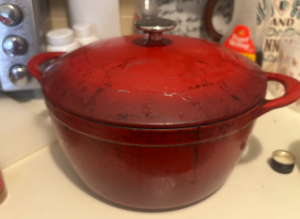
People back then were to call the pot that Black people used ovens, but in modern terms, this is considered a Dutch oven. Dutch ovens are large pots that have a lid that creates an air-tight cooking method. This dutch oven is typically the only pot that they had, so they would it to make stews, soups, and fried food. They would gather herbs from the plantation owner’s garden to season the food well. In modern times, we use dutch ovens typically for soups, stews, or just baking meats, but they are a major part of Black cooking.
Even though Black people had these options for food, they still did not have enough. They mostly relied on pork and cornmeal, and they had to forge most occasions for a complete meal. Forging means gathering resources around the area, including picking nuts, fruits, and vegetables that are growing in the forest.
In the early 1910s, Black people began migrating from the South to the North, Midwest, and western states. Northern cities like New York and Pittsburgh were the hot spots for Black people to travel to. This is where Black people had more rights. This time period of America is called The Great Migration. There’s an estimate of six million Black people who migrated from the South from 1910 to 1970.
There are two phases of the Great Migration: the first from 1910 to 1940. During World War I, white men left to serve the military, so many African Americans who were working as sharecroppers left the South to work in factories, where they could have more rights. The southern states created laws to enforce racial segregation. These laws included educational, political, and racial discrimination. Black people were treated as second-class citizens who didn’t have the same rights as white citizens. Many fled to the South to escape this type of segregation.
Starting in the 1940s-70s, the Second Great Migration was caused by World War II. More people were drafted to serve their country, and some African Americans who were still working sharecropping or other farming jobs left to take more factory jobs in cities. Many of these farmers or sharecroppers were replaced by new agricultural machinery.
Both of the Great Migrations caused a whole wave of African Americans to go from South to North, Midwest, and West, and with them, they brought their cooking recipes, which today became known as soul food.
Problems and Solutions
After the Great Migration, African Americans were eating soul food because it was a part of food culture, which was separate from white Americans’ diet.
Along with issues of stress and poverty, the high salt and fried food in this diet contributed to health issues for many Black people. High blood pressure could cause a stroke, which many of my family members had endured and worried about throughout their lives.
A lot is changing, though, to make important cultural foods healthier. While there are chefs also making healthier meals, home cooking can be very effective since you know what you are putting in your food. There are many Black professional chefs and even homecooks who changed their recipes. Fried food and the amount of salt you season your fish/chicken is very important for you to watch, so these cooks are trying to reduce salt and frying in oil.
A while ago, I used to cook a little salty food until I realized that it was hurting me and my family. Ever since my mom was diagnosed with high blood pressure, our salt intake has been greatly reduced, and I am more careful as time goes on.
Here are some recipes that I personally use.
Recipes
Baked Chicken
Ingredients
- Chicken
- Optional: soy sauce or lemon sauce or olive oil
- salt
- Pepper
- Paprika
- Garlic powder
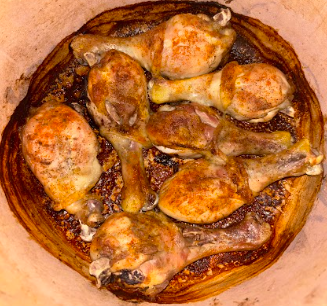
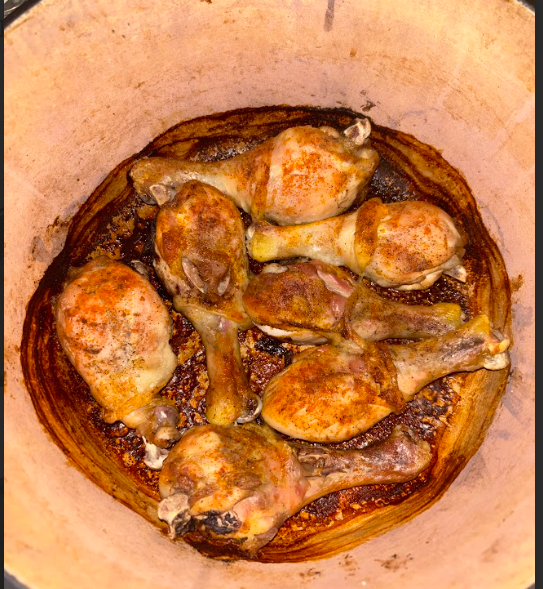
- Pre-heat the oven to 450 degrees. Wash the drumsticks and pull the skin back. Having the skin off or back away from the meat will improve its taste.
- Put the chicken into the Dutch Oven. optional: you can put 4 teaspoons of lemon sauce or soy sauce or olive oil all over the chicken. first before the seasonings. Season with: Salt, pepper, paprika, and garlic powder.
- Put it in the oven at 450 degrees for about 1 hour to 1 hour and 30 minutes. This depends on the size of the dutch oven and the amount of chicken is in there.
- I typically cook 6 chicken drumsticks for 3 people. Check on it once it hits the 50 minute check on it periodically until it is tender and brown. The chicken is easy to take apart.
Baked Mac and Cheese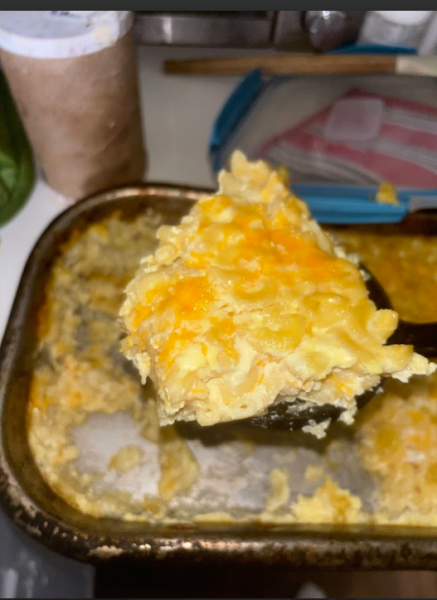
Ingredients
- Macaroni
- Milk
- Cheese of your choice, except American cheese (I used sharp cheddar with Monterey Jack, cheddar asadero)
- Olive oil
- Optional: eggs
- Boil a pot of water, then put the macaroni into the pot. Once you can put your fork through a macaroni, it is done.
- Then you put it either in an iron skillet or a casserole baking dish. Put whatever shredded cheese you want, expecting American cheese. I used Monterey Jack, cheddar, asadero, and sharp cheddar. I usually put about 1 and a half cups of cheese.
- Optional: Mix your milk in a separate bowl with eggs.
- Then you pour milk (or milk/egg mixture) where it is almost to where the macaroni is lined up. Then put it in the oven for 350 for about 10-15 minutes. Until the milk evaporates.
Conclusion
These recipes are what I have made on my own a couple of years ago. Soul food had a part in the evolution of Black History Month, it made Black people feel different in a good way. The celebration of Black History Month echoes through the decades. This year is the 100th anniversary of the start of black history, which was called “Negro History Week”. I am proud of how far we have come. What used to be called Negro History Week in 1926 turned into Black History Month during the time of fighting for Black rights.











Mr. Bucci • Mar 3, 2026 at 9:52 am
Love the background and historical context. As a foodie who hasn’t dabbled in soul food yet, I’m eager to try your recipes!