

As winter rages, students have to brace themselves every weekday morning for icy sidewalks and early starts. Everyday students are now awaiting the fact that they will be locked outside of their school and be forced to wait in temperatures that are cold enough to pose health concerns.
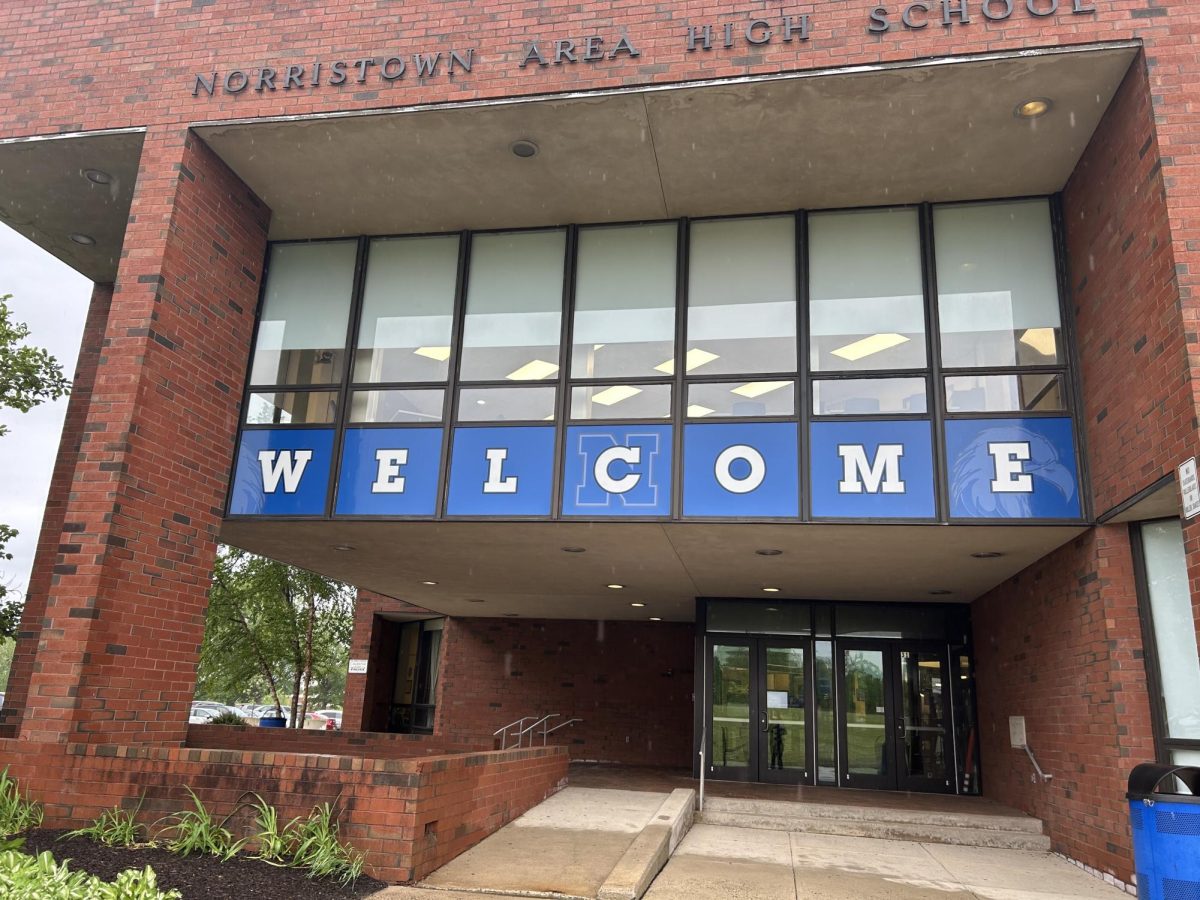
That’s precisely what has been happening. Since the gym doors open at 6:45 and close at 7:03, students who were either early or late for the 15 minute window, waited outside the doors in below-freezing temperatures while the front doors stayed locked until a strict start time (7:15). Some of the students wear thick winter coats while others are unable to afford gear or simply incapable of bringing them to school due to lack of lockers and storage, shivering in their sweatshirts.
As complaints rise among the student body, one question stands out among the rest: is this safe, and if not, why isn’t it being changed for our sake?
Legally, schools are liable for more than academic prowess. They are required to protect the safety and wellbeing of the students in whatever circumstances necessary under what is called a “duty of care.”
According to an article from Abyeta Nelson Injury Law, this means “to take reasonable measures to prevent foreseeable risks and protect students from harm” Failing to retain the safety of students and act on evident environmental hazards, such as the extreme cold that has been settling over the region, could be classified as negligence on the school’s behalf if a student is harmed. The problem isn’t imaginary; extreme temperature exposure is a clearly documented risk, especially for children and students.
Many school districts around the country already have noticed and have implemented measures to combat the issue, unlike us.
Washoe County School District in Nevada “is recommending students remain indoors when the temperature is 20 degrees Fahrenheit or below.” while Aturia School District in Tennessee decided that “when temperatures and wind chill factors fall below 35 degrees including the wind chill, students are kept indoors.”
This shows how other school districts have made the proper decision to utilize limitations in the high-twenties to low-thirties as the capping point for when outdoor waiting is no longer an option due to safety problems. Our school has done nothing to even show their concern on the issue.
The science behind extreme cold exposure highlights why these capping points are so crucial towards safety. Wind chill isn’t just a number on a graph that we ignore. It is a measure of how quickly the human body loses heat in terms of temperature and wind speed.
Even at temperatures over forty degrees, the CDC notes that hypothermia is extremely possible in extreme weather, but has also proven to appear in temperatures over freezing. Similarly, the Pennsylvania Department of health cautions that exposure to dangerously cold temperature can bring hypothermia and even potential frostbite, with the most at risk groups being children who stay outdoors for longer periods of time.
OSHA, the Occupational Safety and Health Administration, gives more information on the topic, highlighting that “prolonged exposure to cold will eventually use up the body’s stored energy”
Wind chill measures taken from early December to January show that conditions would definitely concern any health professional. On December 4th at 7:00 AM, the temperature was 24F with wind speeds at seven miles per hour, making the wind chill about 15.9F. That level of cold, even for short periods, can cause numbness in extremities, pain, and early-onset frostbite on exposed skin, as well as the initial signs of hypothermia.
On December 8th, the temperature was 28F with a wind chill temperature of 20F, still cold enough for the early stages of hypothermia, especially for students without coats. The coldest and most dangerous morning was December 9th, when 12F combined with the high wind speed to create a wind chill of 6.7F. At those extreme temperatures, frostbite and hypothermia can set in quickly.
Not every student has access to a winter coat or a place to store it during school hours. Some arrive in thin hoodies because it’s all they can afford. Others must walk long distances or wait outside for consistently late buses. When these students finally reach their destination, they are made to stand outside in frigid temperatures.
Functioning indoor spaces, such as the cafeteria, auditorium, or other half of the gym sit empty by the doors, easily usable. It also doesn’t make sense to make students who arrived by early bus to wait outside until the doors officially open.
This problem is bigger than a simple inconvenience. It’s about whether students are being subjected to preventable danger and whether the school administrators will act on clear evidence that is already seen in other schools’ environments. Winter in Pennsylvania isn’t getting warmer. The question being asked now is whether the administration will change policies before a student gets legitimately hurt.










Mr. Bucci • Jan 14, 2026 at 8:56 am
Thoughtfully-written and important! Thanks for using your voice!
Mrs. Sarault • Jan 14, 2026 at 7:46 am
Very in depth article, Ellie! Well researched and you made excellent points!