Is Hollywood actually running out of ideas? Or are people just saying that because they’re thirsty for a cup of attention? This complaint shows itself nearly every year. Hollywood releases many movies in a year, and people are quick to judge the film and determine whether or not it was truly original, or just a cheap remake to earn money.
With every new movie released, people tend to say,
“This is just a remake.”
“This doesn’t feel original.”
“Isn’t this similar to that one story from however long ago?”
Or something along those lines.
Yes, movies that have been released seem similar to at least one old movie, tale, or book from a time period before. But think about it. Nowadays, most ideas we think of as original, are not technically ‘original’. Many ideas come from another idea, and that idea comes from a different one, and so forth.
Maybe Hollywood never “ran out” of ideas in the first place. Maybe we’ve forgotten the fact that ideas have always borrowed from what came before.
Shakespeare is a good example of this, as not all of his ideas came straight from his brain. In fact, many of his story/play ideas came from “Holinshed’s Chronicles,” published in 1577 by Raphael Holinshed and other authors. “Holinshed’s Chronicles” is a 16th century history book that retells the history of England, Scotland, and Ireland from how they started to the date of the book’s publication. Shakespeare used such stories like the reigns of Richard III and Henry V. He also used Macbeth, King Lear, and Cymbeline for his plays involving tragedies. He used Holinshed’s Chronicles for plots, characters, and historical events, changing them to fit his theatrical purposes. But most of us who are familiar with Shakespeare’s plays are not familiar with where he obtained the inspiration for them.
“Perhaps the greatest mistake that all students make during their time here is to suppose that they can ever have an original or creative thought,” Professor Waldman, played by John Clesse, tells his class in the 1994 “Frankenstein” film.
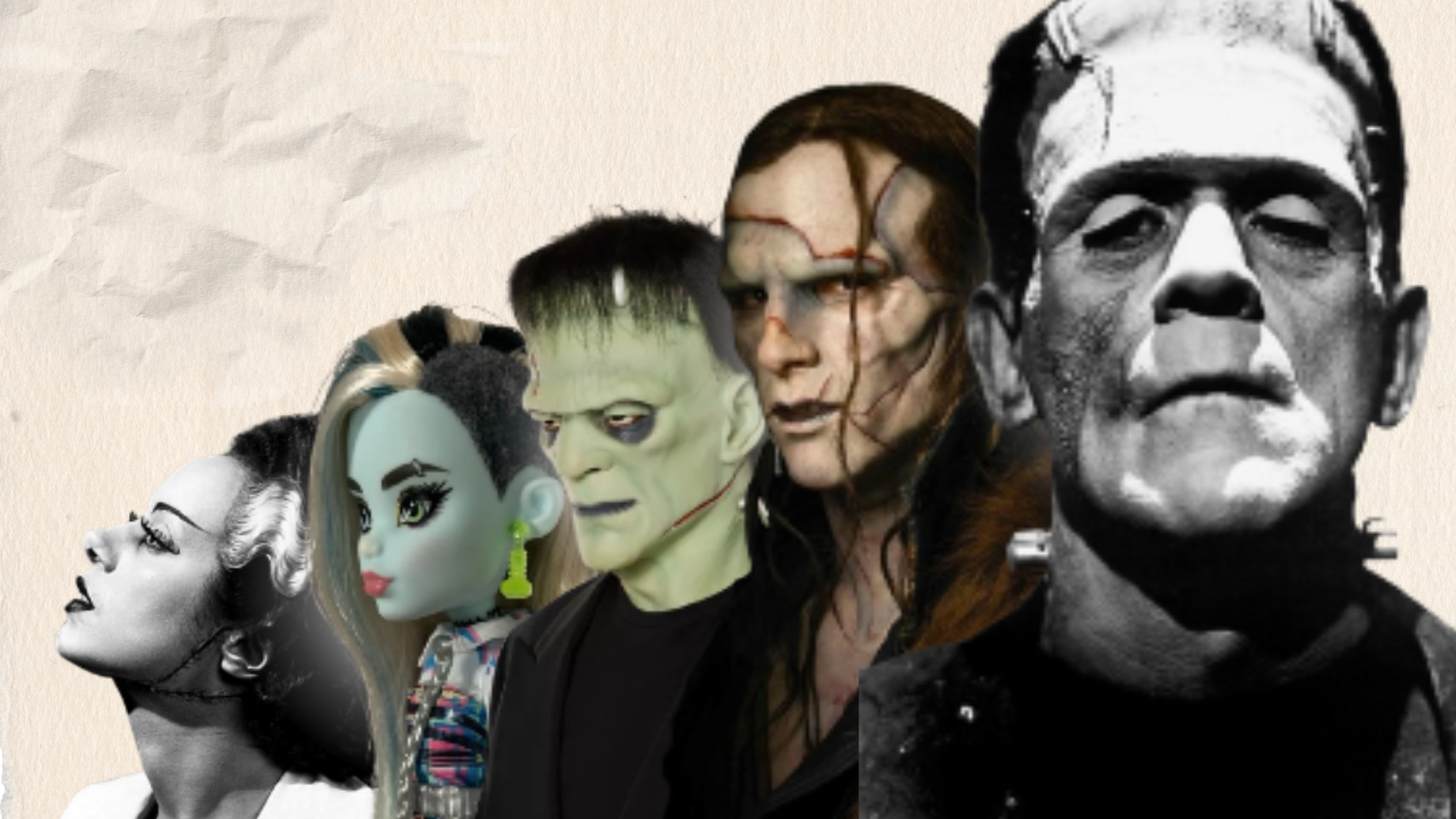
As of 2025, the “Frankenstein” franchise consists of nearly five hundred film adaptations, all based on Mary Shelley’s 1818 novel, “Frankenstein; or, The Modern Prometheus”. Now, that’s a lot of films for just one story, but that goes to show how much inspiration people can gather from an idea that came to be over two hundred years ago. Not every one is exactly the same, though. That’s where creativity comes in and lack of it can cause the films to feel repetitive and boring.
Take the 1931 version of “Frankenstein,” directed by James Whale, for example. This film became one of the first popular Frankenstein adaptations. Though the movie was not accurate to Shelly’s novel, it follows the horror aspect of the original. Victor Frankenstein, a scientist who’s obsessed with creating life from dead body parts, succeeds with his experiment of creating a creature that comes to life. Though, as the creature gains his consciousness, he begins to become confused and angered by the world’s fear of his existence. The first film to shape our idea of Frankenstein visually, it shaped our imagination. Whale introduced the visual styles of Victor and his monster, along with the overall vibe of “Frankenstein”. The film became the most iconic “Frankenstein” out of the films, leading future movies to try and live up to it, or compete with it.
Decades later, came “Young Frankenstein,” released in 1974, directed by Mel Brooks. This Frankenstein film satirizes the well known horror film. Brooks created the character of Victor Frankenstein’s grandson, who refused to accept his family’s history so much to the point where he mispronounces the family last name on purpose. More specifically Victor, as he believed (like most people did) Victor was a mad scientist. After he inherited the well known castle, he winds up repeating his grandfather’s experiment, bringing the creature to life, followed by over the top scenes that mimic the 1931 film with humor. Brooks’ film follows a similar plot, but shows its differences, making fun of the first film while maintaining the heart of the story.
Later came Kenneth Branagh’s “Mary Shelly’s Frankenstein,” released in 1994, with Branagh bringing the story closer to its origins. Victor, driven by his impulse of ambition and desire to master creating life from death, later becomes terrified by his own creation. The film follows the monster’s journey of loneliness, wish for connection, and overall calamity behind the story. Branagh does not just stick to the simple horror aspect of the tale, but dives deeper into the true humanity of Victor and his monster, leading this film to be one of the closest representations of Shelly’s novel.
The most recent adaptation “Frankenstein” film releasing on October 17, 2025, directed by Guillermo de Toro, sort of feels like you’re starting to rewatch the 1994 film over again, but this story held much more emotional depth. The film starts familiarly, a ship in the arctic, and the crew stumbles upon Victor and his monster. As they pull Victor onto the ship, he tells his story to the captain; the journey of what led him to the deranged man he became. When his monster finally finds him on the ship, the monster shares his story; all the pain he went through after he was abandoned because Victor could not accept him for what he was, though Victor was the one who created him. Not only is this a film in which you can truly empathize with the characters, it also shows some truth within humanity; the desperation and possible insanity one can get when something they wish for doesn’t go as planned, and when humanity hurts or destroys something it does not understand. You’re watching the story through their minds individually. This Frankenstein leaves something with you in the end. The anger, hate, agony. It’s put into the characters, and you.
In the end, the Frankenstein adaptations prove that Hollywood isn’t really running out of ideas like people say they are. They’re just recreating ones that we’re already familiar with. Maybe what we should look at is what contradicts one film from another. The idea may not be purely original, but people should look at what the creator did to give their art its originality. Maybe it’s that we expect what we watch to be completely original, something we’ve never seen before, but that’s not entirely possible. Ideas have always come from somewhere whether we realize it or not.